WHO, NEA, and Singapore Air Quality Standards: Plain English
5 June 2026 · 5 min read
What 0.1 mg/m³ formaldehyde actually means, how the WHO and Singapore NEA guidelines compare, and which numbers should actually worry you.
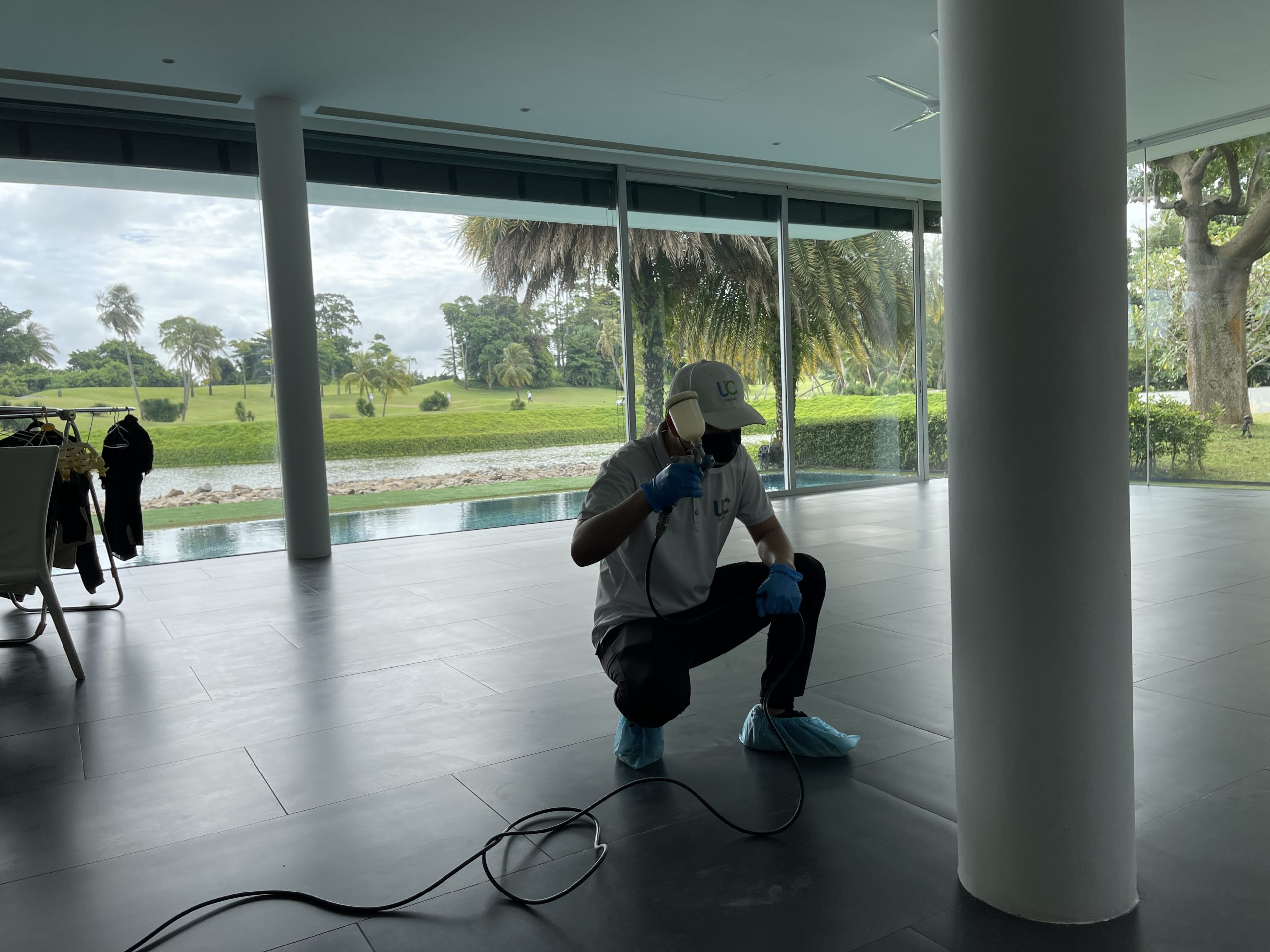
You will see references to “WHO 0.1 mg/m³” and “NEA guideline” in any IAQ test report. They sound technical but they are simple numbers, and knowing what they mean helps you read your own report and decide what to do. This is the plain-language version of the standards that matter for Singapore homes.
The 60-second answer
The most important number for indoor air is the World Health Organization (WHO) formaldehyde guideline of 0.1 mg per cubic metre of air, averaged over 30 minutes. That is the level above which most people start to feel symptoms (eye stinging, sore throat). Singapore’s NEA workplace guideline is similar. A new BTO bedroom in its first year often measures 3 to 10 times this level.
For homes, the question is not “is the level perfect” but “is it within the WHO guideline most of the time, and how vulnerable are the people sleeping there?”
What 0.1 mg/m³ actually means
Imagine a room that is 4 metres long, 4 metres wide, and 2.5 metres tall, a typical Singapore master bedroom. That is 40 cubic metres of air.
If the formaldehyde level is at the WHO guideline of 0.1 mg/m³, that means there is 4 mg of formaldehyde dissolved in the air of the entire room. Four milligrams. About the weight of a single grain of rice. Spread across 40,000 litres of air.
That tiny amount is enough to give a healthy adult mild eye irritation if they sit in the room for half an hour. Smaller amounts are fine; larger amounts cause noticeable symptoms.
This is why indoor air guidelines have to be precise. The difference between “fine” and “irritating” is a few grains of rice’s worth of chemical in a roomful of air.
ppm vs mg/m³: the unit confusion
You will see both in different reports.
- ppm (parts per million). Measures by volume. Out of every million parts of air, how many are the chemical?
- mg/m³ (milligrams per cubic metre). Measures by mass.
For formaldehyde at room temperature, the rough conversion is:
- 0.1 mg/m³ ≈ 0.08 ppm
- 1 ppm ≈ 1.23 mg/m³
Most Singapore reports use mg/m³. Some imported equipment and older reports use ppm. If you see “0.08” in your report, check which unit. 0.08 ppm is at WHO guideline; 0.08 mg/m³ is below it.
The WHO formaldehyde guideline
Set in 2010, still current.
- 0.1 mg/m³ over a 30-minute average. Above this, sensory irritation likely.
- The guideline is for the general population, including children and pregnant women.
- It is not a “safe” line and a “dangerous” line on either side. It is the level above which most people start to feel something.
There is no separate guideline for shorter or longer averages because formaldehyde reacts so quickly in mucous membranes that the 30-minute average captures the meaningful exposure.
NEA Singapore workplace guidelines
Singapore’s National Environment Agency has IAQ guidelines that apply to office and workplace environments, not residential.
- Formaldehyde: 0.1 mg/m³ (8-hour average for occupied workplace)
- TVOC: 0.6 mg/m³ (workplace; somewhat higher than the residential informal guideline of 0.3 to 0.5 mg/m³)
- CO₂: 1,000 ppm (proxy for ventilation adequacy)
- PM2.5: 35 µg/m³ (24-hour average; there are also shorter-term limits)
- Bacteria count: 500 CFU/m³ (in air sampling)
These are the numbers a workplace IAQ audit reports against. For homes, the WHO numbers are the more common reference because residential is unregulated.
How to read your own IAQ report
A typical Singapore residential report shows readings like this:
| Room | Formaldehyde (mg/m³) | TVOC (mg/m³) |
|---|---|---|
| Master bedroom | 0.18 | 0.75 |
| Master wardrobe interior | 0.42 | 1.4 |
| Living room | 0.08 | 0.35 |
| Kitchen | 0.12 | 0.55 |
| Front door | 0.03 | 0.15 |
How to interpret:
- Under 0.05 mg/m³ formaldehyde, under 0.3 mg/m³ TVOC. Safe for everyone, including infants and pregnant women.
- 0.05 to 0.1 mg/m³ formaldehyde. Within WHO guideline. Healthy adults fine. Vulnerable groups (pregnant, infant, asthma) should still aim lower.
- 0.1 to 0.2 mg/m³ formaldehyde. Above WHO guideline. Sensory irritation likely. Action recommended for any household.
- Above 0.2 mg/m³ formaldehyde. High. Treatment is the practical next step.
In the example above, the master bedroom is at 0.18 mg/m³ (above guideline) and the master wardrobe is at 0.42 mg/m³ (the dominant source). Treatment of the wardrobe interior would drop the bedroom reading substantially.
What about TVOC?
TVOC is the sum of volatile organic compounds other than formaldehyde. It is a useful indicator but less specific.
- Under 0.3 mg/m³. Low. Typical of older flats and post-treatment fresh flats.
- 0.3 to 0.5 mg/m³. Moderate. Common in flats 6 to 12 months post-renovation.
- 0.5 to 1.0 mg/m³. Above informal residential guideline. Symptoms likely.
- Above 1.0 mg/m³. High. Strong intervention needed.
TVOC and formaldehyde usually track each other but not always. A flat with high formaldehyde and low TVOC has a single dominant source (likely cabinets or floor adhesive). A flat with high TVOC and lower formaldehyde has paint or solvent residue rather than wood-based emission.
A practical decision tree
Once you have your readings:
- Both formaldehyde and TVOC well below guideline. No action needed. Re-test if symptoms appear or new sources arrive.
- Formaldehyde at or just above guideline, no symptoms. Continue daily ventilation, re-test in 4 to 8 weeks. Often resolves naturally.
- Formaldehyde above guideline with symptoms, OR vulnerable household members present. Source-level treatment is the right call. Pre- and post-treatment testing confirms the change.
- Both well above guideline. Treatment is the practical next step regardless of household composition.
For source-level treatment, see the formaldehyde and TVOC removal page. For what the test actually measures, see the IAQ test guide. For pregnancy- and infant-specific guidelines, see the pregnancy and indoor air guide and the bringing baby home checklist.
Sources
- World Health Organization. Guidelines for Indoor Air Quality: Selected Pollutants. WHO Regional Office for Europe, 2010.
- National Environment Agency, Singapore. Guidelines for Good Indoor Air Quality in Office Premises.
- Ministry of Manpower, Singapore. Workplace IAQ standards.
- ASHRAE Standard 62.1. Ventilation for Acceptable Indoor Air Quality.
Frequently asked questions
What is the difference between mg/m³ and ppm?
Both measure concentration. mg/m³ measures by mass per cubic metre of air. ppm (parts per million) measures by volume of gas. For formaldehyde at room temperature, 1 ppm equals about 1.23 mg/m³. The WHO guideline of 0.1 mg/m³ is roughly 0.08 ppm. Most Singapore IAQ reports use mg/m³.
Are NEA standards stricter than WHO?
Roughly equivalent for formaldehyde. NEA's workplace IAQ guideline aligns with WHO at around 0.1 mg/m³ over an 8-hour average. Some Asian countries (Japan, Korea, China) have stricter residential thresholds (0.05 to 0.08 mg/m³) than Singapore. Singapore's residential air is not formally regulated; the workplace guideline serves as the reference point.
What level should I worry about?
Three rough tiers: under 0.05 mg/m³, safe for everyone including infants and pregnant women. 0.05 to 0.1 mg/m³, fine for healthy adults, watch for vulnerable groups. 0.1 to 0.3 mg/m³, above WHO guideline, irritation likely, treat or ventilate aggressively. Above 0.3 mg/m³, high, strong symptoms, source-level treatment is the right call.
Is there a separate guideline for children?
Not formally from WHO or NEA, but most paediatric environmental health groups suggest under 0.05 mg/m³ for sleeping rooms with infants and young children. This is half the general adult guideline. The implicit assumption: a child's developing system tolerates less.
How often is the WHO guideline updated?
The current formaldehyde guideline (0.1 mg/m³ over 30 minutes) was set in 2010. The science has not changed substantially since, so it remains the reference. Some research argues for tightening to 0.05 mg/m³ for residential use, but no official update yet.
Does Singapore enforce the standards?
For workplaces, yes, NEA conducts inspections and can require remediation. For residential, no, there is no mandatory testing or enforcement for indoor air in HDB or private homes. The WHO/NEA numbers serve as voluntary reference points for homeowners and IAQ providers.
Related Articles
Worried About Your Indoor Air Quality?
Get a free site inspection and air quality assessment. We'll show you exactly what's in your air — and how to fix it.