VOC Removal Services in Singapore
Decompose the full VOC family at the source: formaldehyde, benzene, toluene, xylene (BTEX), styrene, and the rest. Our VOC removal services in Singapore include calibrated formaldehyde testing, photocatalytic remediation across every emission surface, and pre- and post-treatment readings explained on the spot. Free site assessment for every booking.
What Are VOCs and Why VOC Removal Matters
TVOC stands for Total Volatile Organic Compounds: the sum of every VOC in the air at once. Formaldehyde is one VOC. The rest of the family includes benzene, toluene, xylene, ethylbenzene (the BTEX group), styrene, acetaldehyde, and a long tail of named and unnamed compounds. TVOC removal services target the whole family.
VOC = any carbon-based compound that easily evaporates at room temperature. TVOC = the sum of all VOCs in indoor air.
Benzene, toluene, ethylbenzene, xylene. The most-monitored aromatic VOCs. Benzene is a confirmed Group 1 carcinogen.
A new flat with low formaldehyde can still have elevated TVOC from paint solvents and adhesives. VOC removal targets the whole family, not just HCHO.
How Our VOC Removal Treatment Works
The chemistry behind our TVOC removal services: photocatalytic decomposition that breaks VOC molecules into harmless water vapour and carbon dioxide at the source surface.
HCHO, benzene, toluene, xylene
+ light
Photocatalytic coating + visible light
CO₂
Water vapour + carbon dioxide
Source treatment, not air filtering
Our VOC removal coating sits on the actual emission surfaces (carpentry, walls, flooring) and decomposes VOCs as they emerge. Air purifiers filter air after pollution is already in the room; our treatment slows the emission in the first place.
Carbon filters vs photocatalytic VOC removal
Activated carbon adsorbs VOCs (sticks them to the carbon surface) until saturation, then can release them back. Photocatalysis breaks the VOC molecule apart, so it cannot return to the air. No filter changes, no saturation point.
5-Step VOC Removal Process
On-site formaldehyde testing
Calibrated HCHO detector readings
Source identification
Map dominant VOC emitters by room
Photocatalytic application
Coating applied to all source surfaces
Ventilation & cure
2-hour cure cycle, then re-entry safe
Post-treatment formaldehyde retest
Side-by-side readings shared on the spot
Common Sources of VOCs in Singapore Spaces
The six most common emitters that drive elevated VOC and TVOC readings in Singapore homes, offices, and commercial premises, with rough emission timelines for context.
Interior paint and varnish
Fresh paint releases toluene, xylene, ethylbenzene, and a long tail of solvents during application and the first weeks of cure.
Vinyl flooring and laminate adhesives
Floor adhesives outgas a mix of TVOCs that often exceeds the floor itself; sealed-edge installations trap the emission upward into the room.
Pressed-wood and MDF furniture
Particleboard, MDF, and plywood with formaldehyde-bonded resins are the longest-lived TVOC sources in most Singapore homes.
Foam mattresses and upholstery
Polyurethane foam, latex, and synthetic upholstery release styrene, isocyanates, and a complex VOC mix, peaking in the first weeks.
Cleaning chemicals and air fresheners
Strong-scented cleaners, plug-in fresheners, and aerosol sprays continually contribute to indoor TVOC load. Often overlooked as a VOC source during assessments.
Office printers, photocopiers, electronics
Printers, photocopiers, and certain electronics emit ozone and VOCs in steady-state operation. A meaningful baseline in CBD office TVOC removal.
VOC Symptoms: Match the Smell to the Source
Different VOCs smell different. Use this field guide to narrow down what's emitting in your space before on-site formaldehyde testing confirms it instrumentally.
Smell is a useful first signal, not a diagnosis. Many VOCs are odourless above their irritation threshold. Book on-site formaldehyde testing for instrumental confirmation.
When TVOC Levels Are Too High
Two reference thresholds Singapore homeowners and facility managers benchmark against, and the groups that need VOC removal sooner rather than later.
World Health Organization indoor formaldehyde guideline. Above this, eye, nose, and throat irritation becomes likely; above 2x to 5x, longer-term health effects become probable.
Singapore National Environment Agency workplace IAQ guidance for Total VOCs in offices. Most newly renovated commercial premises measure above this threshold for the first 6 to 18 months.
Who needs VOC removal sooner
Even within WHO and NEA thresholds, certain groups react at lower exposure levels and benefit from earlier VOC removal services:
What Our VOC Removal Service Includes
Every VOC removal in Singapore booking covers the same six deliverables. No surprise add-ons, no opaque scope.
Calibrated pre-treatment formaldehyde test
Calibrated HCHO detector readings in every relevant room.
Source-mapped photocatalytic application
Japanese photocatalytic coating applied to identified VOC source surfaces by trained technicians.
2-hour ventilation and cure cycle
Surfaces stay undisturbed during cure; re-entry is safe once the cycle completes.
Calibrated post-treatment formaldehyde retest
Same instruments, same rooms, side-by-side HCHO comparison readings.
On-the-spot post-treatment verification
Pre- and post-treatment HCHO readings explained against WHO and NEA benchmarks before we leave.
Multi-year coating activity
The catalyst keeps decomposing VOCs every time visible light hits the treated surface.
Industries We Serve for VOC Removal
Same TVOC removal protocol, scaled by sector requirements. Commercial work scheduled outside operating hours so business is not interrupted.
HDB, BTO & condos
Residential VOC removal across every Singapore housing type
CBD offices & co-working
Overnight or weekend VOC remediation for fit-outs
Clinics & healthcare
Sensitive-environment VOC removal between operating hours
F&B and restaurants
Pre-opening VOC treatment for new fit-outs and renovations
Childcare & schools
ECDA-approved chemistry for VOC removal in classrooms and play areas
Education facilities
VOC remediation for classrooms, libraries, computer labs, and dorms
Gyms and studios
High-traffic spaces with foam mats and rubber flooring VOC sources
Retail and showrooms
New fit-out VOC removal so customers do not smell the renovation
For HCHO-specific treatment without the broader VOC family, see our formaldehyde removal services. For HDB-targeted scenarios, visit formaldehyde removal HDB & BTO. The original combined hub is at formaldehyde and TVOC removal.
VOC Removal Services FAQs
Everything Singapore homeowners and facility managers ask about VOC removal services and TVOC remediation.
What is the difference between VOC removal and formaldehyde removal?
What is BTEX, and does VOC removal address it?
How much do VOC removal services in Singapore cost?
Do air purifiers do VOC removal?
When should I book VOC testing in Singapore?
Are negative ion generators or ozone good for VOC removal?
Can VOC removal target multiple pollutants at once?
What is the WHO or NEA threshold for TVOC?
Do you offer VOC removal for offices, clinics, and F&B premises?
How long do VOCs and TVOCs stay elevated after renovation in Singapore?
Sources: WHO indoor air guidelines · Singapore NEA workplace IAQ · IARC carcinogen classifications
Pair VOC Removal With
Formaldehyde Removal Services
Named service packages (Essential, Standard, Premium) that decompose formaldehyde (HCHO) and TVOCs at the source for newly renovated HDB flats, BTO units, condos, landed homes, and offices. Includes pre and post-treatment readings, 1-year guarantee.
See formaldehyde removal services →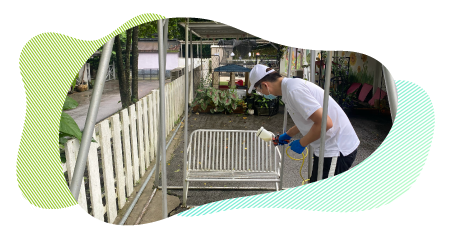
Antibacterial Coating
Long-lasting VLAG antimicrobial coating with silver-ion and visible-light photocatalytic technology. Tested against H1N1. For Singapore offices, schools, childcare, clinics, gyms, and homes.
Explore VLAG antibacterial coating →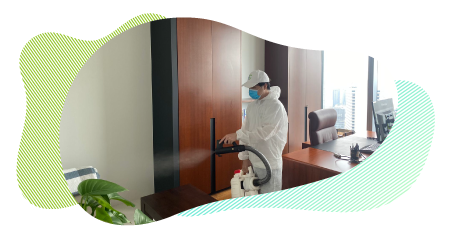
Deep Disinfection
Professional QAC-based deep disinfection with ULV fogging and electrostatic application. Kills bacteria in 1 minute, deactivates coronaviruses in 30 seconds. For offices, clinics, F&B, schools across Singapore.
Book QAC deep disinfection →Page reviewed by UC Fresh Air's certified indoor air quality technicians. Last updated 29 April 2026. VOC family chemistry, BTEX classifications, and threshold values are reviewed against current WHO Indoor Air Quality Guidelines, NEA workplace IAQ guidance, and IARC carcinogen classifications. About UC Fresh Air.
Book Professional VOC Removal Services in Singapore
Free on-site assessment, calibrated formaldehyde testing, fixed-price quote, and pre- and post-treatment readings explained on the spot when remediation is complete. Same protocol for HDB, BTO, condo, offices, clinics, F&B, and childcare.