Why Your New Mattress Still Smells After a Month in Singapore
2 May 2026 · 5 min read
A new mattress that still smells weeks after delivery is releasing VOCs from foam, adhesives, and flame retardants. Here is why it persists in Singapore, and when to act.
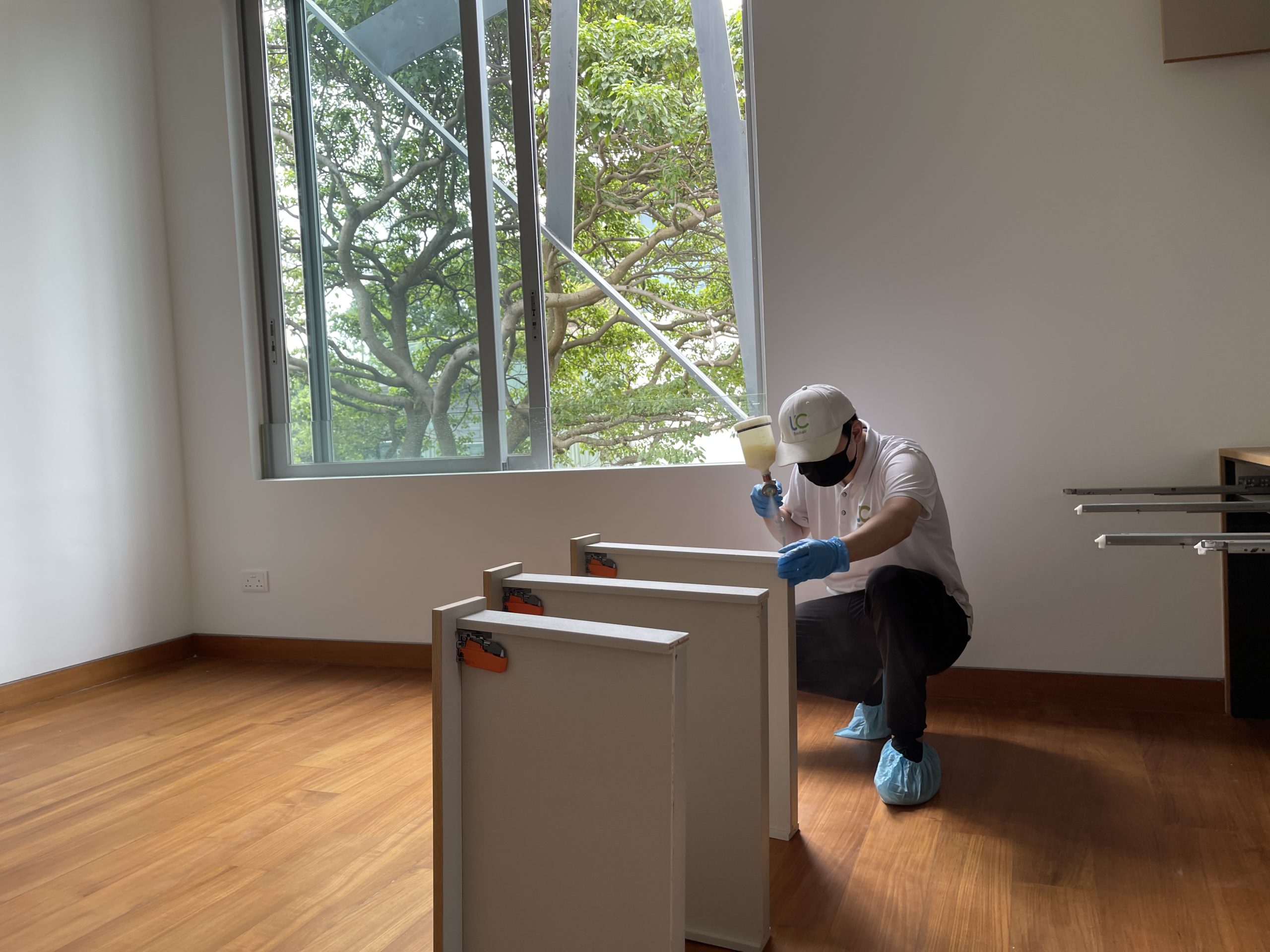
A new mattress that still smells weeks after delivery is releasing volatile organic compounds (VOCs) from polyurethane foam, adhesives, flame retardants, and synthetic fabric finishes. The chemistry is well understood, the timeline is predictable, and there are real differences in how Singapore’s climate accelerates emission compared with the cooler markets where most mattress safety data is collected.
The 60-second answer
A new memory foam mattress emits formaldehyde, toluene, styrene, and a dozen other VOCs from the polyurethane core, the adhesives bonding the layers, and the flame-retardant treatments on the cover fabric. Vacuum-sealed mattresses concentrate this release into the first 24 to 48 hours after unwrapping, then settle into a long, slower tail.
In Singapore, three local factors make the smell persist longer than overseas guides describe: ambient temperatures of 28 to 32°C accelerate off-gassing, aircon-on bedrooms recirculate without exchanging air, and most flats use mattresses inside built-in bedroom carpentry that is also off-gassing. The smell you blame on the mattress may be the bedroom as a whole.
What is actually inside a new mattress
The smell is not one chemical, it is a chord:
- Polyurethane foam (memory foam, high-resilience foam). Releases isocyanates, amines, and formaldehyde during the first weeks. Heavier in cheaper memory foam than premium foam.
- Adhesives between foam layers. Solvent-based adhesives release toluene, xylene, and methylene chloride. The biggest contributor in the first 72 hours.
- Flame-retardant chemistries. Required by safety standards in many countries. Some older formulations (PBDEs) have been phased out, but modern alternatives (TCEP, melamine) still emit at low rates.
- Cover fabric finishes. Antimicrobial treatments, stain protection, dye fixers all release small amounts of formaldehyde and other compounds.
- Glues in pocket-spring units. Even spring mattresses have foam comfort layers and adhesives. A pocket-spring is not VOC-free.
Natural latex (talalay or dunlop), wool batting, and organic cotton emit substantially less, which is why certified-organic mattresses are popular among parents and chemical-sensitive sleepers.
Why it smells longer in Singapore than the manual says
Most mattress care guides give a 24 to 72 hour airing recommendation. That is calibrated for cooler, drier climates. Singapore conditions push the timeline further:
- Heat doubles emission. A 30°C bedroom releases formaldehyde from polyurethane at roughly 2 to 4 times the rate of a 20°C lab. Strong smell that “should” fade in a week instead lasts 3 to 4 weeks.
- Humidity accelerates hydrolysis. Adhesives break down faster in 70 to 80 percent relative humidity, releasing solvent residue continuously rather than as a one-time burst.
- Aircon recirculation traps emissions. Sealed bedrooms with aircon do not exchange air. The smell builds overnight and you wake to a saturated room.
- Mattress is one source among many. A new BTO bedroom often has new carpentry, new paint, new flooring, and a new mattress all emitting at once. The total load is the sum, even if the mattress alone would be tolerable.
A realistic timeline for unaided fade
For a typical polyurethane memory foam mattress in a Singapore bedroom with normal aircon-and-windows-closed habits:
- Days 1 to 3. Strongest smell. Vacuum-compression backlog plus active solvent release. Strong eye and throat irritation likely. Sleep elsewhere if possible.
- Week 1 to 2. Smell drops to “noticeable” levels. Irritation continues for sensitive sleepers.
- Weeks 2 to 6. Background smell only when leaning close. Most people stop noticing.
- Months 2 to 6. Active emission continues at low rates from the foam core, undetectable by smell but measurable. Total contribution to room VOCs falls below the dominant carpentry and paint sources.
If the smell is still strong at week 6 with consistent airing, you likely have a mattress that is in the higher-emission tail of the distribution, or there are other sources adding to the total perceived smell.
How to accelerate the fade
The fundamentals work for mattresses better than for built-in carpentry, because the mattress is portable:
- Unwrap on the day of delivery in a different room from the bedroom. Let the worst 24 hours happen somewhere with maximum ventilation: a service yard, a balcony, or the spare room with windows open.
- Lay flat on a fan-circulated rack. A pedestal fan blowing across the surface, both sides flipped after 12 hours. This is the single most effective home intervention.
- Sun-air the mattress through a sliding door for an afternoon. Direct sunlight for 4 to 6 hours raises surface temperature, accelerates emission, and lets it disperse.
- Wait until the smell is at background before using a mattress protector. Plastic protectors trap accumulated VOCs underneath, slowing the fade.
- Skip the urge to spray essential oils or febreeze it. These mask smell without removing VOCs, and some compounds (limonene, alpha-pinene) react with indoor ozone to form additional formaldehyde.
When the mattress is not actually the problem
A common pattern in Singapore: the mattress smell fades within 4 weeks but the bedroom still smells, the throat is still scratchy, and headaches still happen overnight. In that case, the mattress was a contributor, not the dominant source. The bigger sources are usually:
- Built-in wardrobes with MDF or blockboard interiors releasing into the room every time the door opens.
- Newly painted walls in their first 4 to 8 weeks of off-gassing.
- Vinyl or laminate flooring with adhesive emissions for weeks to months.
The mattress can absorb blame for what is actually a flat-wide problem. If symptoms persist after the mattress smell goes, the next step is an indoor air quality test to find the real source.
When to escalate
Two specific situations where a smelly mattress in a Singapore bedroom warrants action rather than waiting:
- A pregnant woman, infant, or young child sleeping in the room. Their VOC threshold is lower and the cumulative effect is worse. Move them to a different room until the worst phase passes.
- Symptoms that combine. Mattress smell plus eye irritation, sore throat, or wake-up headaches indicates levels well above WHO guidance. See the eyes-sting, sore throat, and headaches guides for the symptom-specific picture.
For a flat-wide problem, the formaldehyde and TVOC removal service treats carpentry, paint, and adhesives at the source. The mattress itself is rarely treated directly; it fades on its own once the bedroom’s other emission sources are dealt with.
Sources
- World Health Organization. Guidelines for Indoor Air Quality: Selected Pollutants. WHO Regional Office for Europe, 2010.
- CertiPUR-US. Foam Standards and Certification Documentation.
- U.S. EPA. Volatile Organic Compounds’ Impact on Indoor Air Quality.
- Liu, X., et al. Emissions of volatile organic compounds from new mattresses. Indoor Air, 2015.
Frequently asked questions
How long should I let a new mattress air out before sleeping on it?
Most manufacturers recommend 24 to 72 hours. In Singapore's heat and humidity, that is not enough for a heavy-emission mattress. A more realistic target is 5 to 10 days of airing in a well-ventilated room before regular use. If the smell is still strong at day 7, the mattress is in the high-emission tail and may take 4 to 8 weeks of normal use to fade further.
Is it safe to sleep on it while it still smells?
For most healthy adults, short-term exposure produces irritation but not lasting harm. The picture changes for infants, pregnant women, asthma sufferers, and anyone with chemical sensitivity. For these groups, sleep elsewhere until the smell drops to background. If you have to sleep on it, use a thick mattress protector and a cotton sheet (which absorb some surface VOCs), and ventilate the room aggressively.
Is memory foam worse than spring or latex?
On average, yes. Polyurethane memory foam uses more adhesives and additives than pocket-spring or natural latex, and emits more formaldehyde and TVOCs in the first weeks. Natural latex (talalay or dunlop) and pocket springs with cotton or wool topping are usually the lowest-emission options. CertiPUR-US certification is meaningful for foam: it caps formaldehyde, phthalates, and several specific VOCs at low thresholds.
Why does my vacuum-sealed mattress smell stronger when first unpacked?
Vacuum compression traps months of accumulated off-gassing in the plastic wrap. When you unwrap, that concentrated load releases over a few hours, which is why the first day always smells strongest. After 24 to 48 hours, the smell drops to the actual ongoing emission rate of the materials, which is the meaningful baseline.
Will plastic mattress covers help?
They reduce surface emission to your face but trap VOCs underneath, where humidity and body heat accelerate further breakdown. Useful for short-term protection during the worst phase, not a long-term plan. The mattress will still off-gas, just slower and with higher concentration if the cover is removed for cleaning.
Should I just buy a more expensive mattress?
Price correlates weakly with off-gassing. Some premium memory foam mattresses emit just as much as budget ones because they share the same polyurethane chemistry. Pay attention to material composition (natural latex, organic cotton, wool batting) and certifications (CertiPUR-US, OEKO-TEX, GOLS for latex) rather than headline price.
Related Articles
Worried About Your Indoor Air Quality?
Get a free site inspection and air quality assessment. We'll show you exactly what's in your air — and how to fix it.