Vinyl Flooring, Laminate, and Wallpaper: The Hidden VOC Sources
23 May 2026 · 5 min read
The visible surface is rarely the issue. It is the adhesive underneath that releases formaldehyde and TVOCs for weeks. Here is what to look for.
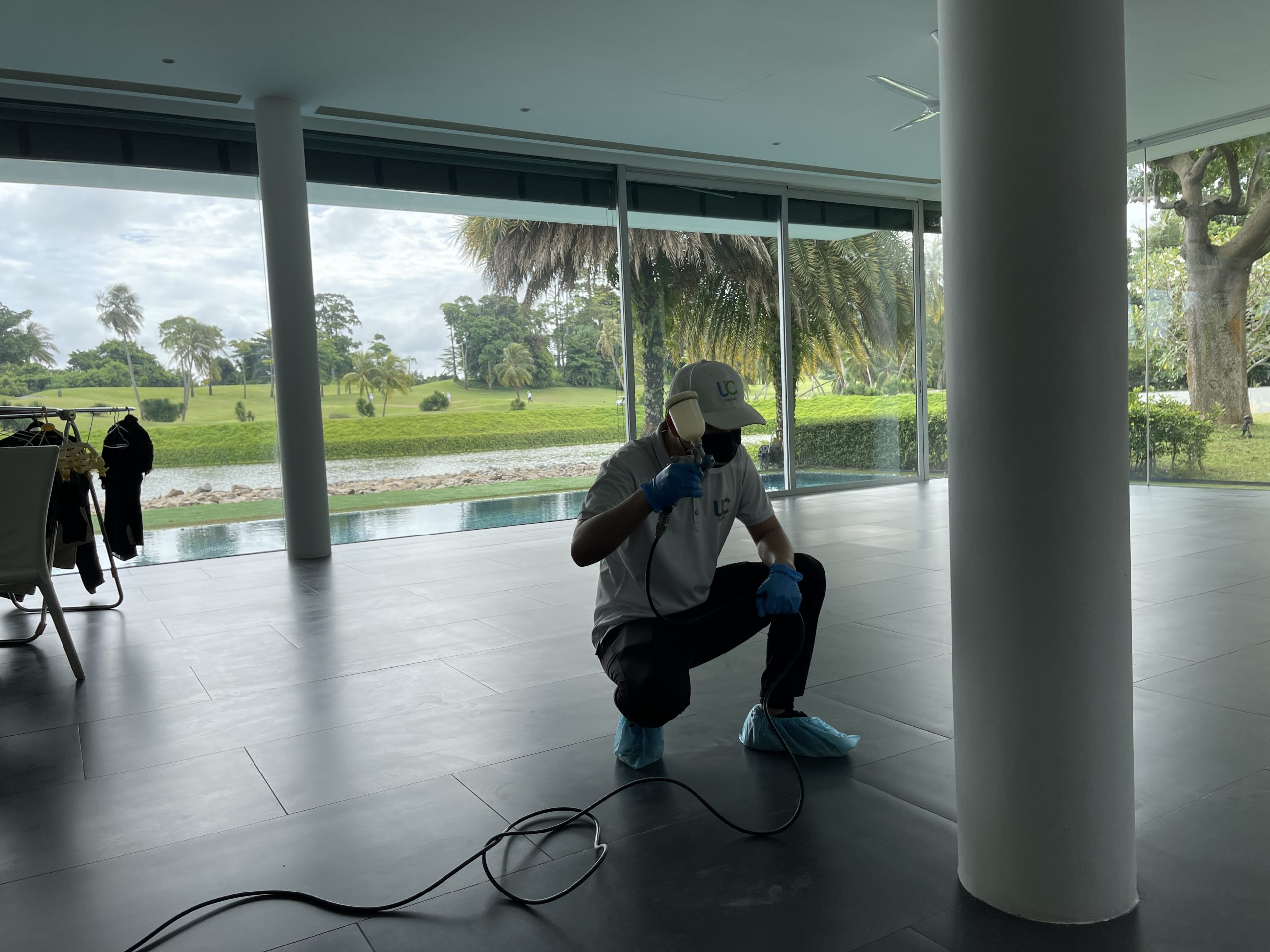
Most people who worry about renovation smell focus on the visible surface: the vinyl plank, the laminate flooring, the wallpaper pattern. The actual emission source is usually underneath: the adhesive that holds it down. Choose well at the contract stage and you reduce the load on your bedroom air for the next 6 to 12 months. Get it wrong and you are airing out the flat for half a year.
The 60-second answer
Vinyl flooring (LVT, SPC), laminate flooring, and wallpaper all emit volatile organic compounds (VOCs) from three places: the wear layer or printed surface, the core material, and the adhesive holding it down. The adhesive is usually the largest single contributor. In Singapore’s heat and humidity, emissions last 1 to 2x longer than overseas data suggests, with noticeable smell for 3 to 8 weeks and background levels for 4 to 6 months.
Three certifications are worth knowing: FloorScore (flooring-specific), GreenGuard Gold (broader), and CARB Phase 2 (composite wood). Anything carrying one of these is a meaningful step up from uncertified.
Vinyl flooring: LVT, SPC, and what is in them
Vinyl flooring comes in two main types in Singapore:
- LVT (Luxury Vinyl Tile). Flexible PVC plank with a printed wear layer. The flexibility means more plasticisers (DEHP, DINP, similar) which can off-gas. Cheaper, easier to install over uneven floors, more comfortable underfoot.
- SPC (Stone Plastic Composite). Rigid composite core (stone powder + plastic binder) with a printed wear layer. Lower plasticiser content than LVT, slightly lower emissions.
Both use adhesive at installation. Click-lock floating systems use less adhesive than glue-down. If you have a choice, click-lock with a low-VOC underlay is the lower-emission option.
The smell of vinyl flooring is mostly four sources: vinyl plasticiser, printing inks, adhesive, and any cushioning underlay. The adhesive contributes most of the formaldehyde; the others contribute most of the chemical-solvent smell.
Laminate flooring: looks like wood, behaves like MDF
Laminate flooring is engineered wood with a printed wear layer that mimics hardwood. The core is HDF (high-density fibreboard) or MDF, the same material as your wardrobe interior, just denser and shaped into planks.
This means laminate flooring emits formaldehyde the way MDF emits formaldehyde. The grade matters: E0 vs E1 vs uncertified. Singapore renovation often uses imported budget laminate where the grade is not labelled, in which case assume E1 or worse.
A floating click-lock laminate floor in a bedroom adds 10 to 20 square metres of fresh MDF surface, often more than your wardrobe. Combined with new built-ins and fresh paint, this is why the bedroom of a freshly renovated flat smells more than the kitchen.
Wallpaper: smaller area, but right where you sleep
Wallpaper is rarely the dominant source, but it can dominate one specific room (a child’s room with featured wallpaper, a bedroom feature wall) for the first 2 to 4 weeks.
Three components emit:
- The paper or vinyl substrate. Vinyl wallpapers emit more than paper-based ones.
- The print and finish. Inks, varnishes, and embossing additives.
- The paste. Especially the pre-pasted variety where the adhesive sits in dry form on the back of each roll.
For a child’s room, choose paper-based wallpaper with a water-activated wheat or cellulose paste, both certified low-VOC where possible. Aggressive ventilation during the first 2 weeks plus a fan in the room moves the smell out faster than waiting it out.
Three certifications worth knowing
You will see many “eco-friendly” claims at the showroom. Three that mean something specific:
- FloorScore. US-based hard-surface flooring certification. Tests against strict ceilings for over 30 individual VOCs. Renewed annually with batch testing. Common on premium SPC and LVT in Singapore.
- GreenGuard Gold. Broader product certification, designed for products used in schools and healthcare. Stricter than FloorScore for some chemicals, lighter for others. Found on various interior finishes.
- CARB Phase 2 / TSCA Title VI. California Air Resources Board / US EPA certification for composite wood (MDF, particleboard, plywood) at strict formaldehyde ceilings. The strictest mass-market wood emission standard. Look for this on laminate flooring, plywood, and engineered wood components.
A product with one of these is a meaningful step up. A product with “eco” or “green” in the name and no specific certification is mostly marketing.
What to specify before installation
If you are at the renovation planning stage:
- Floating click-lock vinyl over glue-down. Less adhesive, faster install, easier replacement.
- FloorScore-certified planks. Costs roughly 10 to 20 percent more than uncertified for vinyl.
- CARB Phase 2 laminate flooring. Same emission ceiling as the strictest US flooring standards.
- Low-VOC underlay. Most underlays are inexpensive cosmetic differences but the right one cuts under-floor adhesive emission.
- Paper wallpaper with cellulose paste, not vinyl wallpaper with synthetic paste. Especially for bedrooms and children’s rooms.
- Adequate ventilation between installation and occupancy. 5 to 7 days of fan-circulated ventilation makes the difference between a tolerable first month and a difficult one.
Three things to do during installation
For control while the build is in progress:
- Visit the site after flooring goes down. Smell the room while empty. The smell test before furniture is in tells you the floor’s contribution alone.
- Run a fan continuously for the first 2 weeks. Cross-ventilation through windows plus a fan pulling air through pulls VOCs out before they settle into furniture and fabrics.
- Avoid stacking new emissions sources. A new wallpaper, new flooring, new wardrobe, and new mattress all in the same 4 weeks compounds. If possible, stagger the worst-emission items.
When this is the smaller part of the problem
In our testing across Singapore homes, the rough rank order of emission contributors in a freshly renovated flat is:
- Built-in carpentry (often dominant by a wide margin)
- Newly painted walls (in the first 4 to 8 weeks)
- Laminate or vinyl flooring
- New mattresses
- New furniture (sofa, bed frame)
- Wallpaper
If you are blaming the flooring but the carpentry is also fresh, the carpentry is more likely the bigger source. An air quality test ranks them.
For source-level treatment that drops formaldehyde across all these surfaces, see the formaldehyde and TVOC removal page. For the contract-stage decisions, see the eight questions to ask your ID and the MDF vs plywood guide.
Sources
- World Health Organization. Guidelines for Indoor Air Quality: Selected Pollutants. WHO Regional Office for Europe, 2010.
- FloorScore. Hard Surface Flooring Indoor Air Quality Certification Program.
- CARB. Airborne Toxic Control Measure to Reduce Formaldehyde Emissions from Composite Wood Products.
- U.S. EPA. Volatile Organic Compounds’ Impact on Indoor Air Quality.
Frequently asked questions
Is SPC flooring safer than LVT?
On average, slightly. SPC (stone plastic composite) has a rigid stone-plastic core that emits less than the softer flexible vinyl in LVT (luxury vinyl tile). Both still emit from the wear layer adhesives. The bigger variable is the brand certification: a certified LVT often beats an uncertified SPC.
What does FloorScore mean?
A US-based emission certification specifically for hard surface flooring. Tests for over 30 individual VOCs against strict ceilings. Better than no certification, comparable to GreenGuard Gold in stringency. If your contractor has flooring options labeled FloorScore, they are usually a meaningful upgrade.
How long does new vinyl flooring smell?
For most vinyl in a Singapore flat, 3 to 8 weeks of noticeable smell, fading to background over 4 to 6 months. The first 2 weeks are the strongest. Heat and humidity accelerate the smell, so the kitchen and bathroom fade faster than the bedroom.
Should I choose tile instead?
Ceramic tile and natural stone are essentially zero-VOC for the tile itself. The grout and any adhesive can emit briefly during installation but cure within a few days. If indoor air quality is a top priority and budget supports it, tile is the lowest-emission option for flooring.
Is wallpaper a big deal?
Less than flooring, but real. Wallpaper paste and pre-pasted backing can emit formaldehyde and TVOCs for 2 to 4 weeks. The square metres are smaller than flooring, but the wall paper is in the bedroom near where you sleep. If you are wallpapering a child's room, choose a low-VOC paste and ventilate aggressively for 2 weeks.
What about laminate flooring (engineered wood look)?
Laminate flooring uses MDF or HDF core boards with formaldehyde-based adhesive, plus a printed wear layer. Emissions are similar to MDF furniture: high in the first weeks, fading over months. AC4 or AC5 rated laminates are durability ratings, not emission ratings. Look for E0/E1 board grade and a separate emission certification if available.
Related Articles
Worried About Your Indoor Air Quality?
Get a free site inspection and air quality assessment. We'll show you exactly what's in your air — and how to fix it.