Are IKEA Wardrobes Safe? Off-Gassing in Flat-Pack Furniture
19 May 2026 · 5 min read
IKEA flat-pack wardrobes do off-gas formaldehyde, but the level depends on the model and is usually lower than uncertified ID-built carpentry. Here is what matters.
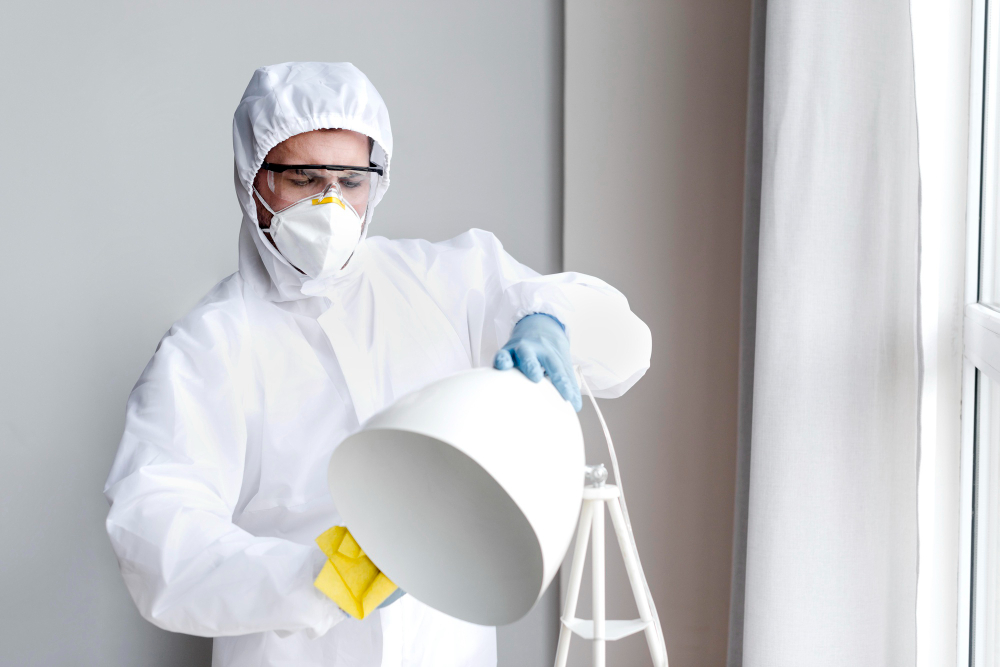
IKEA flat-pack furniture does release formaldehyde, but the typical Singapore household worry that IKEA is unusually unsafe is misplaced. IKEA wardrobes are usually no worse, and often better, than budget ID-built carpentry made from uncertified board. The real differences are about model choice, what you do during the first month, and whether the wardrobe is one source among many.
The 60-second answer
IKEA uses particleboard and fibreboard with European E1 standard adhesives, which means the boards meet a regulated emission ceiling. Some SKUs meet stricter standards (Japanese F-Star or E0), often unlabelled in Singapore. Compared with uncertified Taobao or no-name boards used in budget ID built-ins, IKEA is usually lower-emission, not higher.
The smell from a new IKEA wardrobe is real but fades within 4 to 8 weeks in a ventilated Singapore bedroom. Most of the lingering issue, when there is one, is the room having too many emitting items at once: new wardrobe + new mattress + fresh paint + new flooring all at once.
What is in an IKEA wardrobe
Three components, in rough order of how much they emit:
- The particleboard or MDF panels. Wood chips or fibres held together with urea-formaldehyde resin (the same chemistry as most engineered wood). E1 standard means the panels meet a maximum emission rate during a chamber test.
- The laminate finish. A thin layer of melamine or paper printed with the wood-look pattern, glued to the panel. The glue itself contributes a small amount of additional emission.
- The cardboard packaging. Often more pungent than the wardrobe because corrugated cardboard glue is not held to the same emission standards as furniture board. Throw it away promptly after assembly.
The cut edges of the panels (where holes are drilled and connectors fit) emit at higher rates than the laminated surfaces, which is why the inside of a freshly assembled wardrobe often smells stronger than the outside.
The myth and the reality
A common worry: “I read online that IKEA has high formaldehyde.”
What is true: IKEA furniture does emit formaldehyde, the same as almost all engineered-wood furniture. The amount is regulated by IKEA’s internal IOS-MAT-0003 standard plus regional minimums.
What is misleading: comparing IKEA to “real wood” or “solid wood” furniture. Solid wood is not in the same price category, and most IKEA alternatives in the same budget tier are uncertified imports with unknown emission grade.
The honest comparison: a PAX wardrobe in the IKEA Singapore catalogue is roughly equivalent to or lower-emission than a budget Taobao wardrobe of the same size, and lower than a budget ID-built MDF wardrobe with no specified board grade. The premium ID-built option with E0 board specified in the contract beats them all.
What to look for before buying
Three signals worth checking:
- The IKEA product page mentions a certification. Some products list FSC (forest certification, no relation to emissions) or specific regional safety marks. Boards selected for the Japanese market often appear in Singapore SKUs with the higher standard, even when not labelled.
- The packaging shows a manufacturing date or lot. Older stock has been sitting longer and has off-gassed in storage. A wardrobe with a manufacturing date 8 to 12 months old will emit less when assembled than a fresh-from-supplier batch.
- Try the showroom display. A wardrobe that has been in the IKEA showroom for 6 months is past its high-emission phase. If the display unit is on clearance, that is often the lowest-emission new option you can buy.
Three things to do during assembly
To minimise the load on your bedroom air during the first month:
- Unbox in the service yard or balcony for 48 to 72 hours before assembly. Lets the packaging and surface emission disperse where it does not affect bedroom air.
- Assemble in a well-ventilated area, not the bedroom. A living room with windows open is usually fine. Then move the assembled wardrobe to the bedroom.
- Leave the wardrobe doors open for at least 2 weeks after assembly. Trapped vapour inside the closed wardrobe builds up and leaks into the room every time the door is opened. Open doors during the day means the equilibrium concentration inside drops, and with it the morning sneezing/burning load.
These steps are free and they meaningfully reduce the bedroom’s air load during the worst-emission weeks.
When IKEA is the smaller part of the problem
A common Singapore pattern: family blames the new IKEA wardrobe, but the real source is one of:
- Newly painted bedroom walls. Fresh paint emits heavily for 2 to 4 weeks, stronger than most furniture.
- The new mattress that arrived the same week. Foam mattresses off-gas at a slow steady rate from a large surface directly under your face.
- Built-in carpentry that came with the BTO or condo. Often higher-emission than the IKEA additions and harder to inspect.
- Vinyl flooring or wallpaper installed during renovation. The adhesives behind them keep emitting for weeks.
If your symptoms have not improved after the IKEA wardrobe has been in for 6 to 8 weeks, the wardrobe is unlikely to be the dominant cause. An air quality test ranks the actual sources.
When to escalate
Three triggers for testing rather than waiting:
- Symptoms (eye stinging, sore throat, sneezing, headaches at home) past week 6
- Pregnancy, infants, asthma, or chemical sensitivity in the household
- Multiple new emission sources installed in the same window (renovation + furniture + mattress)
For source-level treatment, see the formaldehyde and TVOC removal page. For the technical decision behind which board is which, see the MDF vs plywood vs particleboard guide. For specific symptoms: eyes stinging at cabinets and chemical smell that won’t go away.
Sources
- IKEA. IOS-MAT-0003 Chemical Compounds and Substances Standard.
- World Health Organization. Guidelines for Indoor Air Quality: Selected Pollutants. WHO Regional Office for Europe, 2010.
- European Standard EN 13986. Wood-based panels for use in construction.
- U.S. EPA. Formaldehyde Emissions from Composite Wood Products, TSCA Title VI.
Frequently asked questions
Is IKEA worse than ID-built built-in carpentry?
Usually not. IKEA boards meet the European E1 standard at minimum and many SKUs meet the stricter Japanese F-Star or E0 standard. ID-built carpentry in Singapore can be E1 if specified, but many budget builds use uncertified or Taobao-sourced board with unknown emission grade. A PAX wardrobe is often lower-emission than a budget ID-built wardrobe, just because IKEA has standards that the no-name supplier may not.
How long does an IKEA wardrobe smell?
The flat-pack IKEA cardboard plus the freshly assembled wardrobe smells noticeably for 2 to 4 weeks in a Singapore bedroom with normal ventilation. Background level continues for 6 to 18 months. The smell is mostly the laminate adhesive and binder used in the particleboard core, not just formaldehyde.
Are particleboard models worse than fibreboard models?
Slightly, on average. IKEA uses both, depending on the SKU. Particleboard is the cheaper internal material with more adhesive per cubic metre, fibreboard (HDF, MDF) is denser and used where finish matters. The emission difference between IKEA particleboard and IKEA MDF is smaller than between either of them and uncertified Taobao board.
What about second-hand IKEA?
Second-hand IKEA is almost always lower-emission than new because most of the off-gassing happens in the first year. A 3 to 5 year old PAX wardrobe sourced from a moving family is usually emitting at background levels. If you are concerned about emissions, second-hand IKEA in good condition is often a better choice than new.
Should I just air it out before assembling?
Sort of helps. Unboxing the parts in a balcony or service yard for 48 to 72 hours before assembly removes some of the surface emission, especially the cardboard and packaging contribution. The bigger source is the cut edges of the boards, which are exposed during assembly. The post-assembly airing in the room (windows open, doors of the wardrobe open) for 1 to 2 weeks does more than the pre-assembly airing.
Does PAX have an E0 option?
Not as a labeled option you can choose. IKEA's emission standards differ by region, Japan and California sales are stricter than EU and Singapore. The boards used in Singapore PAX meet IKEA's global standard, which is roughly E1 with company-specific extras. If you want E0, you usually need to specify it through an ID-built solution with explicit board sourcing.
Related Articles

Worried About Your Indoor Air Quality?
Get a free site inspection and air quality assessment. We'll show you exactly what's in your air — and how to fix it.